


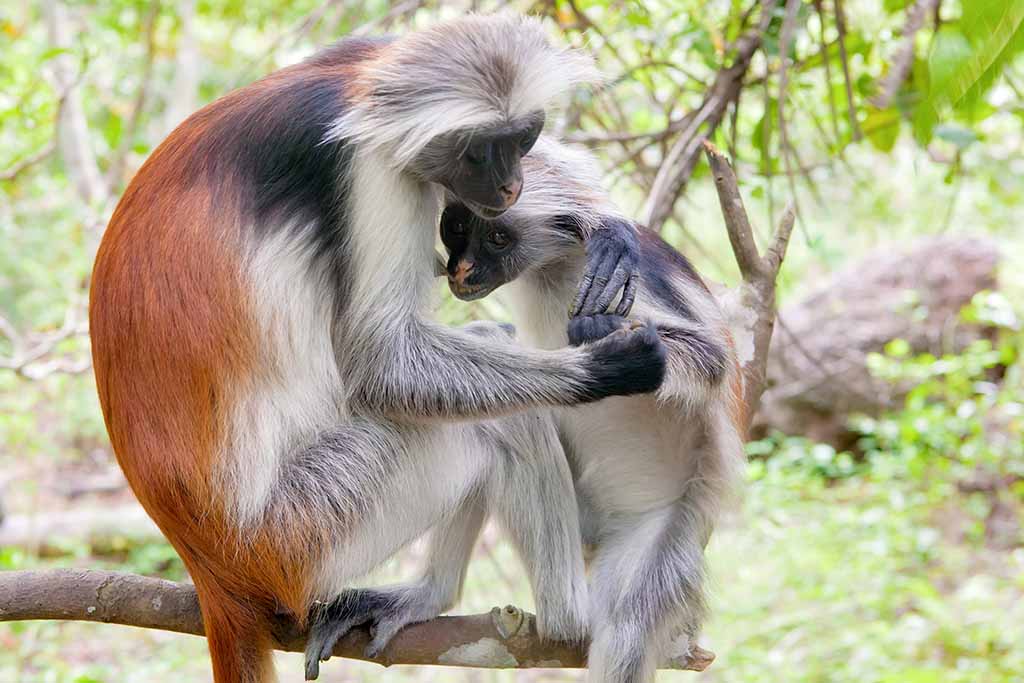
Unveiling the Diversity of Uganda’s Monkey Species
By Mandrill African Safaris
Discover the incredible diversity of Uganda’s monkey species, including vervet monkeys, red-tailed monkeys, black-and-white colobus, L’Hoest’s monkeys, and more. Explore the best places for monkey tracking in Uganda with Mandrill African Safaris.
Introduction: Uganda – A Primate Paradise
When people think about Uganda safaris, gorilla trekking in Bwindi Impenetrable National Park often takes center stage. And yes, mountain gorillas are extraordinary. But here’s something many travelers don’t realize: Uganda is one of Africa’s richest primate destinations, home to over 20 monkey species and more than 15 primate species overall.
From the playful vervet monkeys in savannah parks to the elusive L’Hoest’s monkeys deep in misty forests, Uganda’s monkey diversity is simply unmatched. For wildlife lovers, photographers, birders, and adventure seekers, exploring Uganda’s monkey species adds an entirely new dimension to your safari experience.
At Mandrill African Safaris, we specialize in immersive primate safaris that reveal the hidden treasures of Uganda’s forests and national parks.
Let’s dive into the fascinating world of monkeys in Uganda.
Why Uganda Is a Hotspot for Monkey Species
Uganda’s unique geography makes it a biodiversity powerhouse. Located at the intersection of East African savannah and Central African rainforest, the country offers diverse ecosystems including:
Tropical rainforests
Montane forests
Savannah woodlands
Wetlands
Riverine forests
This ecological diversity creates perfect habitats for different monkey species in Uganda, allowing them to thrive in various environments.
Top monkey habitats in Uganda include:
Kibale Forest National Park
Bwindi Impenetrable National Park
Queen Elizabeth National Park
Mgahinga Gorilla National Park
Semuliki National Park
Budongo Forest Reserve
Lake Mburo National Park
Major Monkey Species in Uganda
1. Vervet Monkey (Chlorocebus pygerythrus)
The vervet monkey is one of the most common monkeys in Uganda. Easily recognized by its black face and silver-grey body, this species is highly adaptable.
Where to See Vervet Monkeys:
Queen Elizabeth National Park
Lake Mburo National Park
Murchison Falls National Park
Entebbe Botanical Gardens
Vervet monkeys are intelligent and social. You’ll often spot them near lodges, campsites, and open savannah areas. They are known for their playful behavior and loud alarm calls when predators are nearby.
2. Red-Tailed Monkey (Cercopithecus ascanius)
The red-tailed monkey is one of the most colorful primates in Uganda. It has a distinctive red tail and white cheek patches.
Best Places to See Red-Tailed Monkeys:
Kibale Forest National Park
Bwindi Impenetrable Forest
Budongo Forest
These monkeys are arboreal and energetic, often leaping through the forest canopy in small groups.
3. Black-and-White Colobus Monkey (Colobus guereza)
This striking monkey, with its long white mantle and bushy white tail, is one of Uganda’s most photogenic primates.
Where to Spot Colobus Monkeys:
Kibale Forest
Queen Elizabeth National Park
Bwindi Forest
Entebbe Botanical Gardens
Colobus monkeys are leaf-eaters and spend most of their time in treetops. Their slow, graceful movements contrast beautifully with the energetic vervet monkeys.
4. L’Hoest’s Monkey (Cercopithecus lhoesti)
Also known as the mountain monkey, L’Hoest’s monkey is shy and prefers dense forest habitats.
Best Locations:
Kibale Forest National Park
Bwindi Impenetrable National Park
Unlike many other monkeys, L’Hoest’s monkeys are more terrestrial and can often be seen foraging on the forest floor.
5. Blue Monkey (Cercopithecus mitis)
Despite its name, the blue monkey is not actually blue but has a greyish coat with a slight bluish tint.
Where to Find Blue Monkeys:
Kibale Forest
Bwindi Impenetrable Forest
Semuliki National Park
Blue monkeys are agile climbers and are usually found in large social groups.
6. Olive Baboon (Papio anubis)
Although technically a baboon, olive baboons are often included in discussions about monkeys in Uganda.
Where to See Olive Baboons:
Murchison Falls National Park
Queen Elizabeth National Park
Lake Mburo National Park
They are large, highly social, and often seen along roadsides during game drives.
7. Grey-Cheeked Mangabey (Lophocebus albigena)
This forest-dwelling monkey is less commonly seen but highly sought after by primate enthusiasts.
Best Place:
Kibale Forest National Park
Grey-cheeked mangabeys move in large groups and are known for their loud vocalizations.
8. Patas Monkey (Erythrocebus patas)
The patas monkey is the fastest primate on land. It prefers open savannah.
Where to See Patas Monkeys:
Murchison Falls National Park
Kidepo Valley National Park
Spotting one is a rare and exciting experience.
Kibale Forest: The Primate Capital of the World
If you’re serious about monkey tracking in Uganda, Kibale Forest National Park should top your list. It is home to:
13 primate species
Over 1,500 chimpanzees
Multiple monkey species
Kibale offers guided forest walks where visitors can see red-tailed monkeys, black-and-white colobus, blue monkeys, L’Hoest’s monkeys, and grey-cheeked mangabeys—all in one day.
At Mandrill African Safaris, our customized Uganda primate safaris include expert guides who help you identify species and understand their behavior.
Best Time for Monkey Tracking in Uganda
Uganda is a year-round destination, but the best months for monkey tracking are during the dry seasons:
December to February
June to September
During these months:
Trails are less muddy
Wildlife is easier to spot
Photography conditions are better
However, forest monkeys can be seen throughout the year.
Conservation of Uganda’s Monkey Species
Uganda Wildlife Authority (UWA) plays a major role in protecting primates and forest ecosystems. Conservation efforts include:
Anti-poaching patrols
Community tourism initiatives
Forest habitat protection
Primate research programs
By booking your safari with Mandrill African Safaris, you directly support conservation and local communities.
Why Include Monkey Tracking in Your Uganda Safari?
Many travelers focus only on gorilla trekking. But adding monkey tracking in Uganda offers:
More affordable primate experiences
Rich photography opportunities
Educational wildlife encounters
A deeper understanding of Uganda’s ecosystems
Imagine combining gorilla trekking in Bwindi, chimpanzee tracking in Kibale, and monkey viewing across multiple parks. That’s the ultimate Uganda primate safari.
Sample 7-Day Uganda Primate Safari Itinerary
Day 1: Arrival in Entebbe
Day 2: Transfer to Kibale Forest – Monkey & chimp tracking
Day 3: Bigodi Wetland Walk
Day 4: Transfer to Queen Elizabeth National Park
Day 5: Game drive & monkey sightings
Day 6: Bwindi Impenetrable Forest – Gorilla trekking
Day 7: Return to Entebbe
Mandrill African Safaris customizes every itinerary to match your interests.
Photography Tips for Monkey Watching in Uganda
Use a fast shutter speed
Bring binoculars
Wear neutral colors
Be patient and quiet
Hire an experienced guide
Forest lighting can be challenging, so early morning tracking gives the best results.
Final Thoughts: Uganda’s Hidden Primate Treasures
Uganda’s monkey species are often overshadowed by gorillas and chimpanzees, but they are just as fascinating. From the striking black-and-white colobus to the energetic red-tailed monkey, Uganda offers one of Africa’s most diverse primate experiences.
If you’re looking for a safari that goes beyond the ordinary, a Uganda primate safari with Mandrill African Safaris will leave you amazed.
Come discover the playful, colorful, and intelligent monkeys that make Uganda a true primate paradise.
Frequently Asked Questions (FAQs)
1. How many monkey species are found in Uganda?
Uganda is home to over 20 monkey species and more than 15 primate species in total.
2. Where is the best place for monkey tracking in Uganda?
Kibale Forest National Park is considered the best destination for monkey tracking in Uganda.
3. Are monkey tracking permits required in Uganda?
Unlike gorilla and chimpanzee trekking, general monkey viewing does not require special permits in most parks, but park entrance fees apply.
4. What is the best time to see monkeys in Uganda?
The dry seasons (June–September and December–February) are ideal for monkey tracking.
5. Can I combine gorilla trekking and monkey tracking?
Yes. Many Uganda safari packages combine gorilla trekking in Bwindi with monkey and chimp tracking in Kibale Forest.
6. Are Uganda’s monkeys endangered?
Some species face threats from habitat loss and hunting, but conservation programs are actively protecting them.
7. Is monkey tracking safe?
Yes. Guided monkey tracking with experienced safari guides is safe and well-managed.
Plan Your Uganda Primate Safari Today
Ready to explore Uganda’s incredible monkey species? Contact Mandrill African Safaris for tailor-made Uganda wildlife safaris that showcase the very best of Africa’s primate diversity.


