

Unlocking the Secrets of Uganda’s Tree-Climbing Lions in Ishasha
2026-02-04
Uganda’s Endangered Species: What Is Being Done for the Nubian Giraffe?
2026-02-04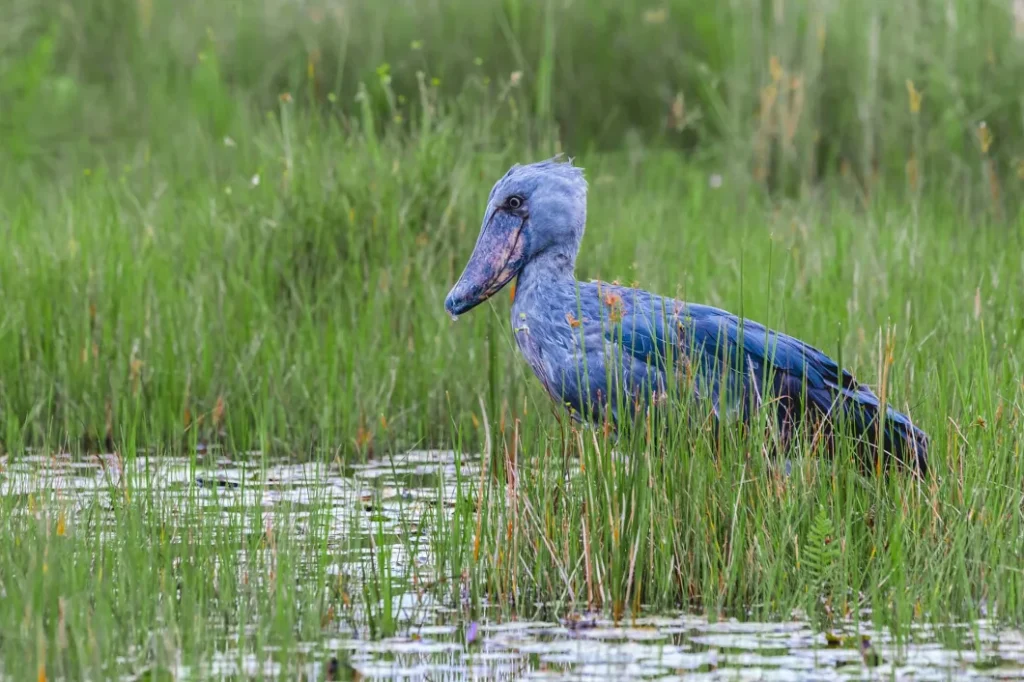
The Secret Life of the Shoebill Stork: Where to Find Them in Uganda
Discover the secret life of the elusive Shoebill Stork in Uganda. Learn where to find them — from Mabamba Swamp to Murchison Falls — their behavior, habitat, and insider birding safari tips with Mandrill African Safaris.
Introduction: Uganda’s Feathered Dinosaur
If there’s one creature that captures the imagination of birders and wildlife lovers alike, it’s the Shoebill Stork (Balaeniceps rex). With its massive, shoe-shaped bill, prehistoric appearance, and serene stalking behavior, the Shoebill is often described as a living dinosaur. Found almost exclusively in East African wetlands, Uganda is widely regarded as one of the best places on Earth to see this remarkable bird.
Who is the Shoebill Stork?
The Shoebill Stork is not your typical bird. Tall, quiet, and solitary, it can stand motionless for long stretches — waiting — like a statue poised to strike. Its astonishing bill fits perfectly for scooping up lungfish, tilapia, frogs, and even baby crocodiles with deadly efficiency.
Key Traits
-
Height: Up to 150 cm tall
-
Wingspan: Over 2.5 meters
-
Bill: Broad, heavy, and shoe-shaped
-
Behavior: Patient hunter, often still for hours
-
Status: Vulnerable, rare, and highly sought by birders
There’s a reason the Shoebill feels like it stepped out of a prehistoric swamp — visitors often describe it as a dinosaur with feathers due to its ancient appearance and commanding presence.
Prime Shoebill Destinations in Uganda
Uganda’s diversity of wetlands makes it one of the top birdwatching destinations in Africa — and a Shoebill hotspot. Below are the best places you can visit with Mandrill African Safaris to see this enigmatic bird.
Mabamba Swamp: Uganda’s Shoebill Capital
![Mabamba Shoebill Swamp]
Mabamba Swamp on Lake Victoria — the most reliable place in Uganda to see the Shoebill Stork.
No Uganda Shoebill safari is complete without a visit to Mabamba Swamp, located on the northern shore of Lake Victoria. This vast papyrus-fringed wetland is arguably the most reliable location for spotting Shoebills.
What Makes Mabamba Special?
-
It’s a Ramsar-designated wetland, meaning it’s internationally recognized for its ecological importance.
-
Canoe safaris through papyrus channels offer a quiet, immersive birding experience.
-
Home to numerous bird species, including Swamp Flycatchers, Malachite Kingfishers, and African Jacanas.
Guided Mandrill African Safaris tours include an early morning canoe ride — often before 7 a.m. — when Shoebills are most active and feeding.
Best Time to Visit Mabamba: Early morning and late afternoon.
Murchison Falls National Park: Nile Delta Shoebill Safari
![Nile Delta Shoebill]
Shoebill viewing on a boat cruise through the Nile Delta at Murchison Falls National Park.
While known for its dramatic waterfall and big game, Murchison Falls National Park also offers fantastic Shoebill sightings — especially in the Victoria Nile Delta, where the river spreads into Lake Albert.
Take a boat cruise at sunrise to glide through papyrus-lined channels and watch Shoebills standing motionless among the reeds. Combined with sightings of Goliath Herons, African Fish Eagles, and other waterbirds, this is a birder’s dream safari.
Best Time: Early morning cruises when bird activity peaks.
Ziwa Rhino Sanctuary & Lugogo Wetlands
Nestled on the road to Murchison Falls, Ziwa Rhino Sanctuary isn’t just about rhinos — it houses peaceful wetlands, including Lugogo Swamp, excellent for birders.
Unlike larger parks, this area offers a more intimate, quieter birding experience, where early morning tours on canoe or drizzle boats increase your chances of encountering Shoebills along tranquil waterways.
Lesser-Known Shoebill Hotspots
For adventurous travelers seeking off-the-beaten-path experiences:
-
Semuliki National Park — western Uganda swamp regions occasionally host Shoebills, alongside forest bird species.
-
Queen Elizabeth National Park (Ishasha sector) — Shoebills have been seen around lake margins.
-
Lake Mburo & Lake Kyoga Wetlands — remote swamps with scattered sightings.
These locations are ideal when combined with broader safari routes, offering a richer wildlife itinerary beyond birding alone.
Inside the Secret Life of a Shoebill
To understand why Shoebill encounters are so magical, you need to know how these birds live:
Stillness as Strategy
Shoebill Storks are masterpieces of patience. They will often stand entirely still — seemingly frozen — for hours as they wait for prey to wander by. Then, with astonishing speed, they strike with that iconic heavy bill.
This “sit-and-wait” hunting technique is one reason sightings feel so special — you suddenly notice them amongst the papyrus, almost like a ghost emerging from the swamp.
Diet & Hunting
The Shoebill’s diet includes:
-
Lungfish and tilapia
-
Frogs and water snakes
-
Mudfish and small reptiles
-
Occasionally even baby crocodiles
Their wide bill isn’t just for show. It’s a precision tool — perfect for grabbing slippery prey in murky waters.
Social Behavior
These birds are mostly solitary. Pairs only come together briefly to breed, and then go their separate ways. They are quiet birds, often uttering soft croaks or clicks rather than loud calls.
Best Time of Year for Shoebill Safaris
Shoebills can be spotted year-round in Uganda, but sightings are especially frequent during:
Dry Seasons:
-
December–February
-
June–August
During these months, lower water levels make wetlands more accessible, and birds are easier to locate during canoe or boat safaris.
Insider Tips for Birdwatchers
To help you get the most out of your Shoebill safari with Mandrill African Safaris:
 Go Early: Birds are most active in the cool morning light. Take a Guide: Local guides know secret waterways and behavior patterns. Bring Binoculars: The subtle movements are easier to spot at a distance. Stay Quiet: Shoebills are shy and easily disturbed.
Why Uganda is a Birding Paradise
Uganda isn’t just gorillas and lions — it’s a birdwatcher’s heaven. With hundreds of wetland species, papyrus-fringed lakes, and protected reserves, the country supports thriving Shoebill populations that are increasingly accessible to travelers.
Whether you’re a seasoned birder or a curious traveler, a Mandrill African Safaris Shoebill adventure connects you with nature’s wonders in some of East Africa’s most beautiful and bio-diverse landscapes.
Planning Your Shoebill Safari
Let Mandrill African Safaris tailor your ultimate birdwatching experience — from transportation and expert guides to multi-day wildlife tours combining Shoebill tracking with Uganda’s other iconic safari highlights.


