What makes Queen Elizabeth National Park a top birding destination in Africa?
Discover why Queen Elizabeth National Park (QENP) is a birdwatcher’s paradise — 600+ species, Kazinga Channel boat safaris, papyrus specialists and forest endemics. Plan your birding safari with Mandrill African Safaris.
Queen Elizabeth National Park (QENP) is one of Africa’s most spectacular — and most bird-rich — protected areas. For serious birders and casual nature-lovers alike it packs an astonishing variety of species into a relatively compact area: wetlands, open savannah, crater lakes, gallery and lowland forest, papyrus swamps and riverine edges all fall inside its boundaries. That habitat mosaic is exactly what makes QENP a “must” on any East Africa birding itinerary.
A staggering checklist — numbers that matter
Depending on the checklist you consult, QENP hosts well over 600 bird species, a figure that places it among the parks with the highest bird diversity in Africa and East Africa’s leader for protected-area checklists. That sheer species richness is the single most convincing reason birders head to the park. Whether you’re ticking off waterbirds at sunrise or searching forest gullies for skulking endemics, the odds of seeing something special here are excellent.
Habitat diversity = bird diversity
QENP’s magic is habitat variety. Within a short drive you can move from the papyrus-lined Kazinga Channel to the open Kasenyi plains, then into shady Maramagambo Forest or the wooded Kyambura Gorge. Each habitat supports different bird suites: papyrus specialists and African finfoot in wetlands, pelicans and skimmers on open water, raptors over the plains, and forest turacos and hornbills in the thick gallery forest. That habitat compression — lots of ecosystem types in one park — lets birders accumulate long lists fast.
Kazinga Channel: a waterbird spectacle
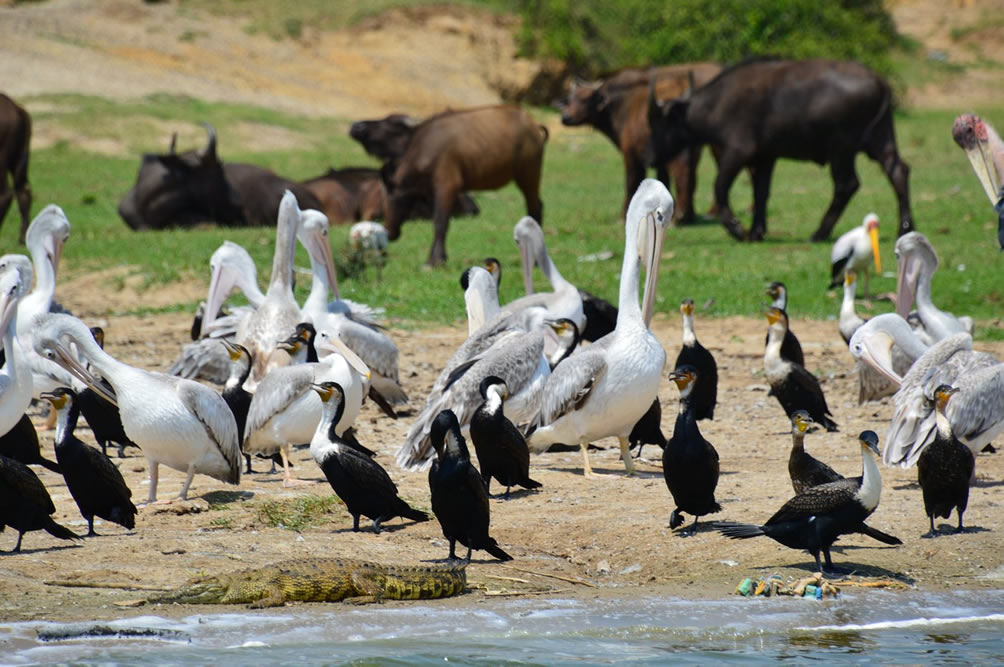
If there’s one single place in QENP that keeps birders grinning it’s the Kazinga Channel. Boat trips along the 32 km channel deliver close-up views of waterfowl, waders, cormorants, pelicans, African jacanas and kingfishers — often within arm’s-length. It’s also prime time for large congregations of waterbirds and excellent for photographic opportunities. For anyone who loves aquatic species, a Kazinga boat safari is indispensable.
Forest and gorge specialists — Maramagambo and Kyambura
QENP is not just about watery spectacles. Maramagambo Forest and Kyambura Gorge host forest specialists and skulking species you’ll struggle to find in open-country parks: turacos, hornbills, barbets and several rare passerines. For mixed-species flocks, dawn walks and canopy listening sessions in these forest patches are some of the most rewarding birding experiences in Uganda.
Rare and “big five” birds of Uganda
QENP’s list includes many of Uganda’s most sought-after birds — sometimes referred to as the country’s “big five” birds — and a number of species of conservation concern. From long-crested eagles patrolling the skies to the brilliant Great Blue Turaco and secretive papyrus specialists, the park offers both showy and shy species that keep experienced birders returning year after year.
Best spots in the park for targeted birding
-
Kazinga Channel (boat) — waterbirds, pelicans, storks, herons.
-
Mweya Peninsula & Kasenyi plains — raptors, larks, pipits, open-country species.
-
Maramagambo Forest — forest specialists, turacos, woodpeckers.
-
Kyambura Gorge — gorge specialists, mixed flocks and chimpanzee calls as a bonus.
-
Ishasha & papyrus swamps — papyrus endemics and marsh specialists; keep an eye out for elusive wetland birds.
When to visit — timing for migrants and resident highlights
Ringing in your calendar: November to April is especially good for migrants arriving from Eurasia, but QENP is productive year-round thanks to its resident forest and wetland species. If you want the highest diversity (migrants + residents), aim for the November–April window; for quieter roads and excellent game viewing paired with birding, shoulder seasons can be ideal.
Why Mandrill African Safaris for your QENP birding trip?
At Mandrill African Safaris we design birding safaris that maximize sightings while keeping comfort and conservation front and center. Our birding itineraries combine early-morning game drives, guided Kazinga boat trips and forest walks with expert local guides who know the park’s microhabitats and seasonal movements. We also offer tailor-made packages for small groups, photographers, and life-list hunters — plus comfortable lodges positioned at key birding gateways (Mweya, Kasenyi, Kyambura).
Tip: ask for a guide experienced in bird acoustics — many skulking species are best located by call.
Practical packing & birding tips
-
Bring a good pair of binoculars (8×42 or 10×42), a field guide (or app), a notebook and a camera with a decent zoom.
-
Dawn and dusk are the best birding windows — most birds are active and lighting is beautiful.
-
For forest birding, wear neutral clothing and expect muddy trails; for boat trips, a hat and sunscreen help.
-
Respect the birds and habitats: keep distance, avoid loud calls and stick to trails and boats.
Quick FAQs
How many species can I expect to see on a 3-day birding trip? With targeted guiding you can easily see 150–300 species in a focused 2–3 day itinerary depending on season and sites visited.
Are there specialists for papyrus and waterbirds? Yes — Kazinga Channel, Ishasha papyrus areas and parts of Lake George/Kikorongo are where papyrus specialists and waterbirds concentrate.
Queen Elizabeth National Park is not just a “big game” park — it’s a birding powerhouse where wetlands, forest and savannah combine to give birders an unequalled mix of species and settings. Whether you’re chasing papyrus specialists, photographing pelicans on the Kazinga Channel, or listening for forest turacos in Maramagambo, QENP rewards curiosity and patience. Ready to plan? Mandrill African Safaris will craft a birding itinerary that puts you exactly where the action is — contact us to start building your birding adventure today.