

Tracking the Rare Red-Colobus Monkeys in Bigodi
2026-02-11
Hidden Gem: Wildlife Spotting in Lake Mburo National Park
2026-02-11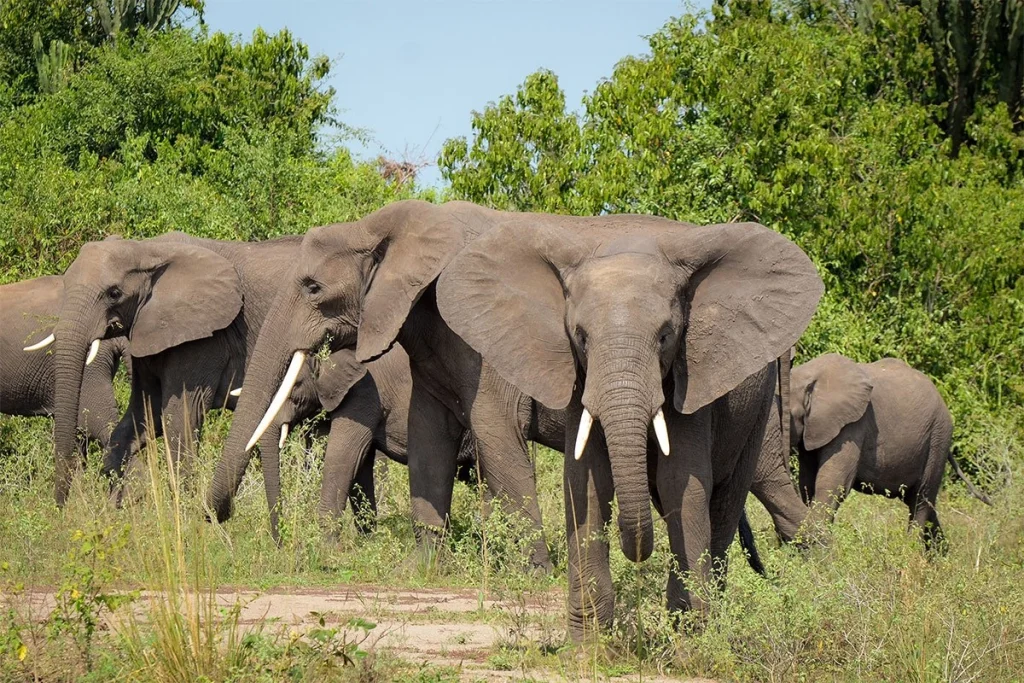
Uganda’s Forest Elephants: Behavioral Differences and Habitat
Discover the elusive forest elephants of Uganda — their unique behavioral traits, habitat preferences, and how they differ from savanna elephants. Explore where to see them on safari, why they matter to ecosystems, and how Mandrill African Safaris offers unforgettable wildlife experiences.
Few wildlife encounters in Africa stir the imagination like witnessing an elephant in its natural environment. While savanna elephants often steal the safari spotlight on the plains of Queen Elizabeth and Murchison Falls National Parks, Uganda is also home to a far more elusive and lesser-known giant — the forest elephant (Loxodonta cyclotis). These secretive inhabitants of Uganda’s dense rainforests offer a rare and captivating glimpse into an extraordinary elephant world shaped by deep shade, tangled undergrowth, and ancient forest trails.
At Mandrill African Safaris, we believe that understanding the behavior and habitat of forest elephants not only enriches your safari experience but also deepens your appreciation of conservation and biodiversity in Uganda’s forests.
Introduction to Forest Elephants in Uganda
Forest elephants are a distinct ecological group within the African elephant lineage. Though long regarded as a subspecies of African elephants, recent genetic research confirms that forest elephants are a separate species — smaller, more elusive, and uniquely adapted to life in dense rainforest environments.
In Uganda, these cryptic giants are not easy to spot. They are typically found in some of the country’s most biologically rich and forested landscapes — including Bwindi Impenetrable National Park, Kibale National Park, Mgahinga Gorilla National Park, and pockets of Semliki and Mount Elgon National Parks.
While their numbers are small compared to savanna elephants, encountering forest elephants is a highlight for intrepid wildlife lovers and nature photographers who seek something off the beaten path.
Physical Traits: Forest Elephants vs. Savanna Elephants
One of the first questions safari travelers ask is: “How do forest elephants differ from the elephants I see in the savanna?” The answer lies in several key physical and behavioral adaptations:
1. Size and Build
Unlike their savanna counterparts, forest elephants are smaller and more compact, suited to maneuver through dense forests without tearing through the canopy. Typical adult forest elephants weigh around 3 tons and measure roughly 3 to 4 meters in length.
2. Tusks and Trunk
Forest elephant tusks are straighter, denser, and point downward, which helps them move through thick vegetation without snagging. These tusks are highly valued on the illegal ivory market — a tragic factor that puts forest elephants at risk from poaching.
Their trunks, meanwhile, are long and dexterous — ideal for reaching fruit, stripping bark, and digging for minerals hidden beneath the forest floor.
3. Feet and Ears
Forest elephants typically have five toes on their front feet and four on their hind feet, compared with four toes on both sets for many savanna elephants. Their ears are more rounded — a feature that enhances hearing within the forest and aids subtle communication.
Habitat: Life Within Uganda’s Forest Giants
The habitat of forest elephants is perhaps what makes them most fascinating. Unlike the open savannah landscapes where grasslands stretch to the horizon, forest elephants dwell in:
1. Dense Rainforests
Bwindi Impenetrable Forest and Kibale Forest are among Uganda’s oldest and most biodiverse rainforests. Here, the canopy soars high, vines tangle, and sunlight barely reaches the ground. Forest elephants navigate this misty world with confidence, using ancient trails forged over generations.
2. Swamps and Bamboo Zones
In Bwindi, forest elephants frequently forage near Mubwindi Swamp and bamboo zones, where they feed on bamboo shoots during the wet season and strip bark in drier periods.
3. Forest Edges and Water Sources
Forest elephants can also be found along forest edges, rivers, and waterholes — critical resources where they drink, socialize, and interact with other wildlife.
Despite their preference for deep forest, some forest elephants roam into transitional zones where forest meets savannah, making them occasional guests in places that connect dense jungle and open plains.
Behavioral Patterns of Forest Elephants
When you think about elephants, you might imagine large herds roaming wide plains. But forest elephants behave quite differently, shaped by the complexity of their habitat.
1. Elusiveness and Movement
Forest elephants tend to be more secretive and solitary or live in small family groups. Thick vegetation limits visibility, and these elephants use low-frequency communication — infrasonic sounds that travel through the forest floor — to stay in touch over long distances.
2. Foraging and Diet
Unlike savanna elephants that graze largely on grasses, forest elephants forage on a diverse array of vegetation — including leaves, bark, fruits, grasses, and climbers. This dietary flexibility reflects the rich plant life of their environment.
They sometimes dig deep with their tusks and trunks in search of mineral salts — essential nutrients not always readily accessible in forest soils.
3. Interaction with the Environment
Forest elephants are often described as ecosystem engineers. Their movements, feeding, and physical presence help shape the forest terrain. As they push through undergrowth or knock down trees, they create pathways that other animals use, facilitate sunlight penetration to the forest floor, and help seeds disperse across broad areas.
This role is vital — not just for elephant survival but for sustaining the diverse plant and animal communities in Uganda’s oldest forests.
4. Breeding and Life Cycle
Forest elephants breed year-round. Their reproductive cycle is slow: females give birth to a single calf after a lengthy gestation period (around 22 months) — one of the longest among land mammals.
This slow reproduction rate makes population recovery especially fragile in the face of threats.
Forest Elephants vs. Savanna Elephants: Key Behavioral Contrasts
To better understand why these two elephant types behave differently, here’s a direct comparison:
| Behavioral Feature | Forest Elephant | Savanna Elephant |
|---|---|---|
| Group Structure | Small family groups or solitary | Large matriarchal herds |
| Habitat | Dense forests | Grasslands & open plains |
| Tusks | Straighter, downward pointing | Curved and longer |
| Movement | Quiet, secretive | More visible & expansive |
| Diet | Diverse forest vegetation | Grass & shrubs |
These behavioral differences reflect the ecological niches each occupies — and why you are more likely to hear forest elephants than see them.
Conservation Challenges Facing Uganda’s Forest Elephants
Sadly, forest elephants are among the most threatened large mammals in Africa. Their slow reproductive rate, combined with shrinking forest lands and poaching pressures, puts their populations at risk.
1. Habitat Loss and Fragmentation
Human encroachment for agriculture and settlement has reduced forest habitats, isolating elephant populations and limiting their ability to migrate or find mates.
2. Poaching and Ivory Demand
The high quality of forest elephant ivory — straighter and denser than that of savanna elephants — has made them a target for illegal ivory trade. Though Uganda’s forests are less heavily poached than some regions in Central Africa, pressure remains significant.
3. Conservation Efforts
Protected area designation, anti-poaching patrols, and cross-border conservation initiatives are some of the key strategies helping safeguard forest elephants. Mandrill African Safaris partners with local conservation groups to support sustainable tourism that benefits both wildlife and communities.
Where to See Forest Elephants in Uganda
If you’re planning a wildlife safari with Mandrill African Safaris and hope to catch a glimpse — or at least signs — of forest elephants, here are the best places:
1. Bwindi Impenetrable National Park
Known primarily for mountain gorillas, Bwindi’s deep forest is also home to forest elephants that leave trails, tracks, and dung — especially around swamp edges like Mubwindi Swamp.
2. Kibale National Park
Better known for chimpanzees, Kibale’s forest also shelters forest elephants — though sightings are rare and often occur during guided forest treks.
3. Other Forest Parks
Mgahinga Gorilla National Park, Semliki, and highland forest regions near Mount Elgon offer additional habitat for these mysterious creatures.
Whether you’re on a gorilla trek or a thrilling nature walk, attentive guides can help you identify recent forest elephant signs — a rewarding discovery for keen wildlife enthusiasts.
Tips for Spotting Forest Elephants on Safari
Because they’re elusive, forest elephant sightings require patience and experience. Here are some practical safari tips:
-
Go with experienced guides who recognize elephant signs in trails, dung, and footprints.
-
Visit early or late in the day when elephants are most active.
-
Explore swamps and natural clearings where elephants forage or drink.
-
Listen for low-frequency calls — often inaudible to humans but occasionally detectable near dense forest edges.
Frequently Asked Questions (FAQs)
Q1. Are forest elephants endangered?
Forest elephants are considered highly vulnerable due to habitat loss and poaching pressures. Conservation efforts continue across range states to protect remaining populations.
Q2. What makes forest elephants different from savanna elephants?
Forest elephants are smaller, have straighter tusks, and are adapted to life in dense forests, whereas savanna elephants are larger, live in open grasslands, and display more visible herd behavior.
Q3. Can tourists see forest elephants in Uganda?
Yes — but sightings are rare due to their secretive nature. You’re more likely to find tracks and signs during guided forest walks in parks like Bwindi and Kibale.
Q4. What role do forest elephants play in the ecosystem?
They act as ecosystem engineers by creating clearings, dispersing seeds, and shaping forest plant communities that support broader biodiversity.
Q5. How threatened are forest elephants compared to savanna elephants?
Forest elephants generally face higher vulnerability due to slower reproduction and intense poaching interest in their ivory, compounded by rapid habitat loss.
Conclusion
Uganda’s forest elephants represent one of the most fascinating, yet under-appreciated, chapters in African wildlife. From their unique behavioral adaptations to their critical habitat roles, these giants of the jungle deepen the magic of any safari adventure — especially when experienced with knowledgeable guides like those at Mandrill African Safaris. Safari travelers who venture into the heart of Uganda’s rainforests often return not just with memories, but with a greater respect for the complex web of life these elephants help sustain.
Embark on a journey to see Uganda’s forest elephants — and let Mandrill African Safaris guide you through the ancient green heart of Africa’s wildest places.


