Burundi’s Unique Bird Species: A Birdwatcher’s Guide to Burundi’s Hidden Avian Treasures
2026-08-12
Hidden Safari Destinations in Tanzania: Discover Africa Beyond the Serengeti
2026-08-13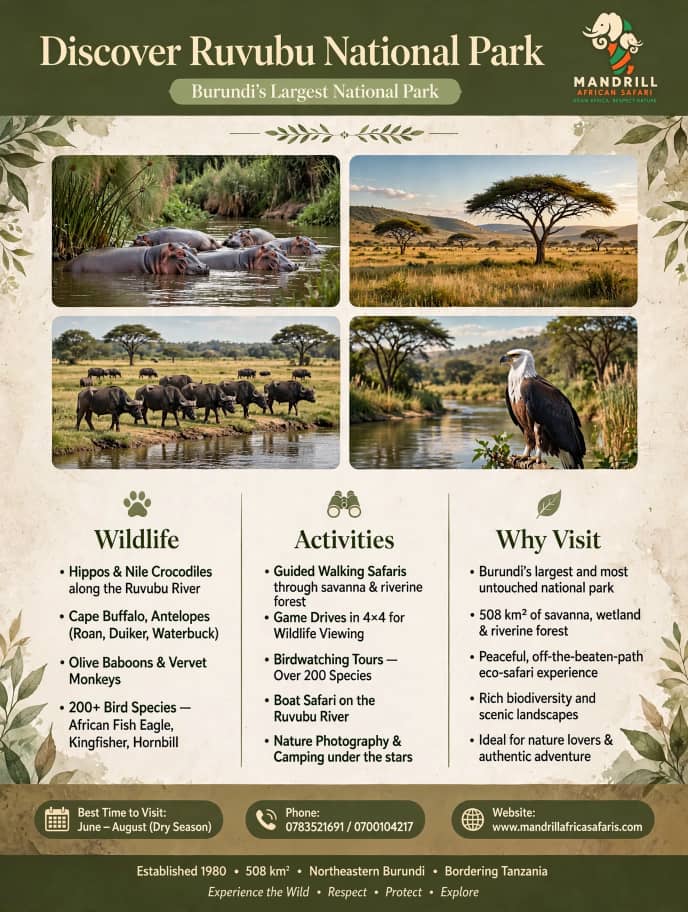
Ruvubu National Park Wildlife Guide: Discover Burundi’s Hidden Safari Gem
Discover Ruvubu National Park wildlife in Burundi. Explore buffalo, hippos, antelopes, monkeys, birds, the Ruvubu River and safari experiences with Mandrill African Safaris.
Ruvubu National Park is one of Burundi’s most fascinating wildlife destinations and one of the country’s best-kept safari secrets. Located in northeastern Burundi, the park protects a vast wilderness of savannah, wetlands, riverine forests, grasslands and woodland habitats. Covering more than 50,000 hectares, it is the largest protected ecosystem in Burundi and takes its name from the Ruvubu River, which flows through the park.
For travelers searching for an authentic Burundi wildlife safari, Ruvubu National Park offers an opportunity to explore a relatively quiet and less-commercialized African wilderness. The park is particularly known for its African buffalo, hippopotamus, antelopes, monkeys and diverse birdlife, while its river and wetlands create beautiful landscapes for nature lovers and photographers.
If you are planning a trip to Burundi and want to experience wildlife away from the more crowded safari destinations of East Africa, this Ruvubu National Park wildlife guide will help you understand what to see, when to visit and what to expect.
Where Is Ruvubu National Park?
Ruvubu National Park is situated in northeastern Burundi, extending across parts of Karuzi, Muyinga, Cankuzo and Ruyigi provinces. The park follows the valley of the Ruvubu River and covers approximately 508 square kilometres according to tourism references.
The Ruvubu River is the defining feature of the park. It provides water and supports wetlands, floodplains and vegetation that sustain wildlife throughout the ecosystem.
The park’s landscape is very different from Burundi’s mountainous and forested areas. Visitors can expect broad savannahs, wooded areas, riverine vegetation and wetlands, creating excellent opportunities for wildlife observation and nature photography.
Wildlife in Ruvubu National Park
One of the main reasons to visit Ruvubu is its wildlife. Although the park is not marketed on the same scale as famous safari destinations such as the Serengeti or Maasai Mara, it offers an intimate experience in a less-developed wilderness environment.
The Burundi tourism authority identifies African buffalo, antelopes, monkeys and hippopotamuses among the important wildlife found in Ruvubu National Park.
1. African Buffalo
The African buffalo is one of Ruvubu’s most notable large mammals. Buffalo are generally associated with grasslands, savannahs and areas where water and grazing are available.
Seeing a herd of buffalo moving through the open vegetation can be one of the highlights of a Ruvubu safari. Visitors should always maintain a safe distance and follow the instructions of their guide because buffalo are powerful wild animals.
2. Hippopotamuses
The Ruvubu River and surrounding wetlands provide suitable habitat for hippopotamuses. These enormous semi-aquatic mammals spend much of the day in or close to water before emerging to feed, particularly around dusk and at night.
For wildlife enthusiasts, observing hippos in their natural river environment provides a memorable African safari experience.
3. Antelopes
Ruvubu supports a variety of antelope species. Depending on location and conditions, wildlife enthusiasts may encounter animals such as waterbuck, reedbuck, bushbuck, duikers and other antelope species.
Antelopes are particularly interesting for photographers because their behavior changes according to habitat, season and time of day.
4. Warthogs
The warthog is another African savannah animal associated with the park. These distinctive animals can often be recognized by their large heads, facial warts and tusks.
Watching warthogs forage across open grassland is an entertaining part of a wildlife drive.
5. Monkeys and Other Primates
Ruvubu’s mixture of woodland and riverine habitats supports several primate species. Sources describing the park mention olive baboons, vervet monkeys, red-tailed monkeys and blue monkeys, among others.
Primates add another dimension to a Ruvubu wildlife experience, particularly when exploring areas with thicker vegetation.
Birdwatching in Ruvubu National Park
Ruvubu National Park is also an attractive destination for birdwatching in Burundi. Its combination of river, wetlands, grasslands, woodland and forest habitats creates opportunities for observing a variety of resident and migratory birds.
Available sources give different estimates for the number of bird species recorded in the park, so travelers should treat exact totals cautiously. Published references range from around 200 species to more than 400, depending on the survey and source.
Bird enthusiasts may encounter species associated with rivers, wetlands, savannah and woodland habitats, including kingfishers, herons, storks, bee-eaters and birds of prey.
For birdwatchers, an experienced local guide can make a significant difference because many species are easier to identify by their calls, behavior and habitat than by appearance alone.
The Ruvubu River: The Heart of the Park
The Ruvubu River is central to the park’s ecology. Its waters support wildlife and vegetation while its surrounding wetlands provide important habitat for birds, hippos and other animals.
The river also creates some of the park’s most attractive scenery. Green vegetation, open savannah and winding waterways combine to create excellent opportunities for photography.
The river’s importance means that wildlife viewing can often be particularly rewarding around water sources. During dry periods, animals may concentrate around remaining water and productive feeding areas.
What Can You Do in Ruvubu National Park?
Wildlife Viewing
Wildlife viewing is the primary attraction. With an experienced guide, visitors can explore the savannah and search for buffalo, hippos, antelopes, monkeys and other wildlife.
The Burundi tourism authority notes that experienced guides can lead visitors on short walks lasting several hours or on full-day excursions into the park.
Nature Walks
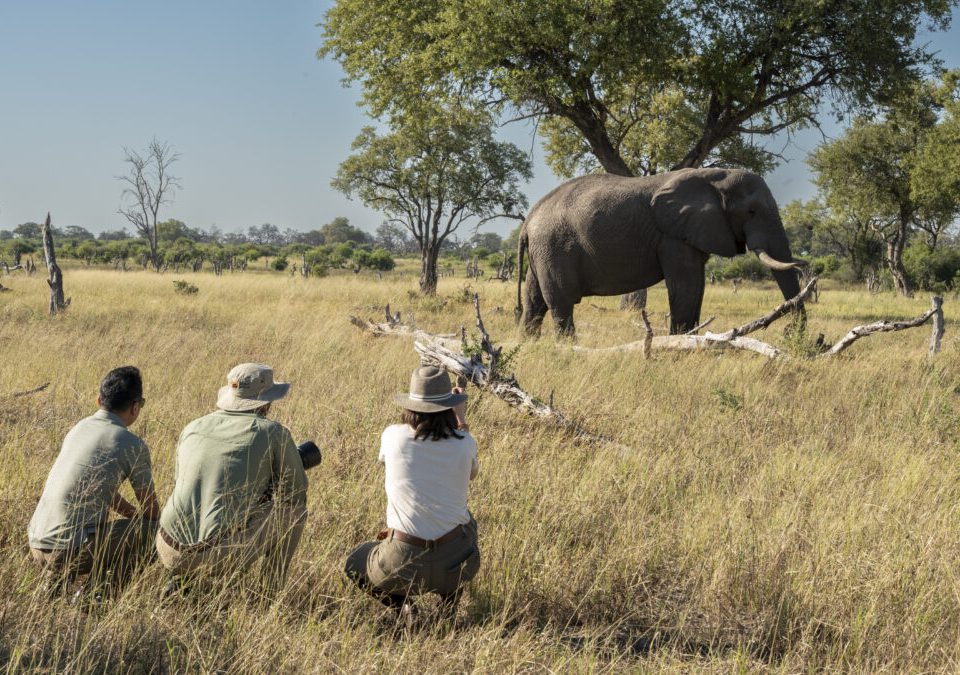
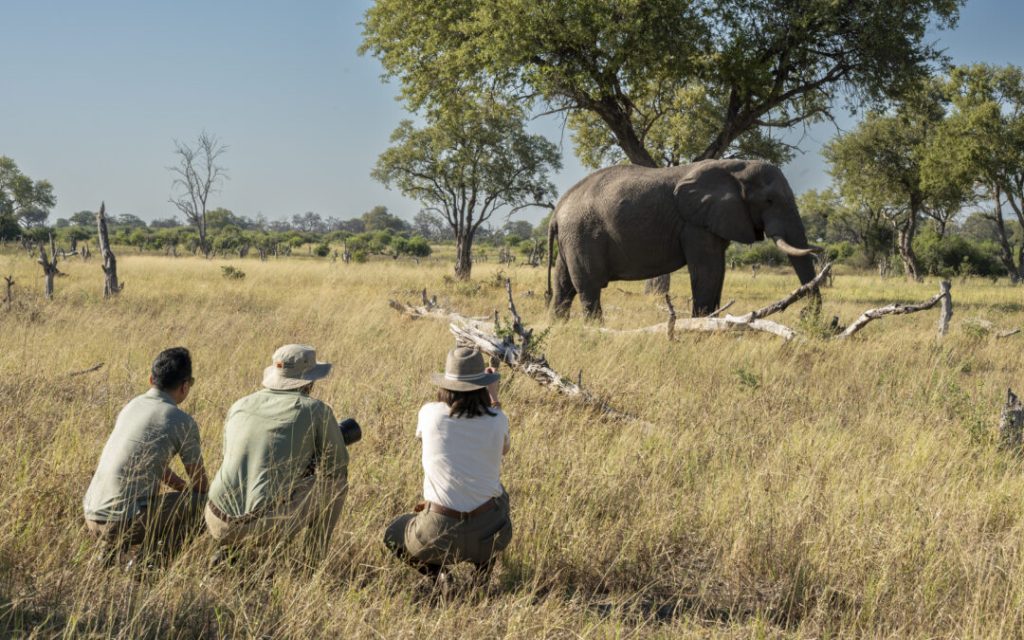
A guided nature walk in Ruvubu National Park provides a different perspective from viewing wildlife from a vehicle. Walking allows visitors to pay closer attention to plants, insects, tracks, animal signs, bird calls and smaller wildlife.
Because this is a wilderness environment, visitors should always walk with an authorized and experienced guide.
Birdwatching
Birdwatching is ideal for travelers interested in photography, ecology and lesser-known African wildlife destinations.
Early mornings are particularly attractive because birds are generally active and temperatures are cooler.
Wildlife Photography
Ruvubu’s open landscapes and riverine scenery create excellent opportunities for wildlife photography in Burundi. Photographers can capture animals, landscapes, birds and local vegetation while enjoying a relatively peaceful setting.
A telephoto lens, binoculars and sufficient storage space for photographs are useful additions to your safari equipment.
Best Time to Visit Ruvubu National Park
The best time to visit Ruvubu depends on your interests and tolerance for changing weather and road conditions.
The dry season can be advantageous for wildlife viewing because vegetation may become less dense and animals can be easier to locate around water sources. However, the exact timing and conditions can vary from year to year.
The wetter months bring greener landscapes and can be excellent for birdwatching, photography and appreciating the park’s vegetation. Rain can, however, affect road and trail conditions.
For the best experience, travelers should discuss current conditions with their safari operator or local guide before traveling.
Why Visit Ruvubu National Park?
There are several reasons why Ruvubu deserves a place on an East Africa safari itinerary.
1. It is less crowded.
Ruvubu offers a quieter wildlife experience compared with some of East Africa’s internationally famous parks.
2. It protects a major wilderness ecosystem.
The park is one of Burundi’s most important protected natural areas and covers more than 50,000 hectares.
3. It has diverse habitats.
River, wetlands, savannah, woodland and riverine vegetation create a variety of environments for wildlife.
4. It offers authentic wildlife encounters.
Buffalo, hippos, antelopes and primates are among the animals visitors may encounter.
5. It is excellent for nature lovers.
The combination of scenery, wildlife, birds and relatively undeveloped landscapes makes Ruvubu attractive to travelers seeking something different.
Conservation Importance of Ruvubu National Park
Ruvubu National Park plays an important role in protecting Burundi’s remaining wildlife and natural habitats. Its river, wetlands, grasslands and woodland provide important ecological functions while supporting numerous animal and plant species.
Conservation is especially important because protected areas do not exist in isolation. Healthy wildlife habitats help maintain biodiversity, protect water systems and preserve natural landscapes for future generations.
Responsible tourism can contribute to these efforts by creating economic incentives for conservation and encouraging visitors to appreciate Burundi’s natural heritage.
When visiting Ruvubu, travelers should avoid disturbing animals, never litter, follow guide instructions, avoid removing plants or other natural materials and respect local communities and conservation regulations.
What to Pack for a Ruvubu Wildlife Safari
For a comfortable Ruvubu National Park safari, consider packing:
- Lightweight, comfortable clothing
- Neutral-colored safari clothes
- Comfortable walking shoes
- Wide-brimmed hat
- Sunglasses
- Sunscreen
- Insect repellent
- Binoculars
- Camera and spare batteries
- Power bank
- Reusable water bottle
- Light rain jacket
- Small backpack
- Personal medications and toiletries
Binoculars are particularly valuable because wildlife and birds may sometimes be observed from a distance.
Ruvubu National Park with Mandrill African Safaris
At Mandrill African Safaris, we believe that Africa’s most rewarding experiences are not always found in the most famous destinations. Ruvubu National Park provides an opportunity to explore Burundi’s wildlife, landscapes and natural heritage while experiencing a quieter side of East Africa.
A Ruvubu wildlife experience can also be incorporated into a broader Burundi safari or an East African adventure combining Burundi with destinations in Uganda, Rwanda, Kenya or Tanzania.
Our safari planning approach focuses on creating practical itineraries that combine wildlife, culture, scenery and authentic local experiences.
Whether you are a wildlife photographer, birdwatcher, nature enthusiast or first-time safari traveler, Ruvubu can provide an unforgettable introduction to Burundi’s wild landscapes.
Final Thoughts
Ruvubu National Park is one of Burundi’s hidden wildlife treasures. From the Ruvubu River and its wetlands to open savannahs and wooded habitats, the park offers a fascinating combination of landscapes and wildlife.
African buffalo, hippos, antelopes, monkeys and diverse birdlife make the park an exciting destination for nature lovers. Its relatively undeveloped character also makes it appealing to travelers looking for an off-the-beaten-path African safari.
If you are planning a Burundi wildlife safari, consider adding Ruvubu National Park to your itinerary. With responsible tourism, knowledgeable guides and sufficient time to explore, this remarkable wilderness can become one of the most memorable stops on your East African adventure.
Plan Your Burundi Wildlife Adventure with Mandrill African Safaris
Ready to explore Ruvubu National Park and discover the wild side of Burundi? Contact Mandrill African Safaris to discuss a customized Burundi safari, wildlife tour or combined East Africa itinerary designed around your interests, budget and travel schedule.