Nature Reserves You Should Visit in Burundi
2026-08-20
21 Days Gabon Safari Itinerary: A Complete Wildlife, Rainforest & Coastal Adventure
2026-08-24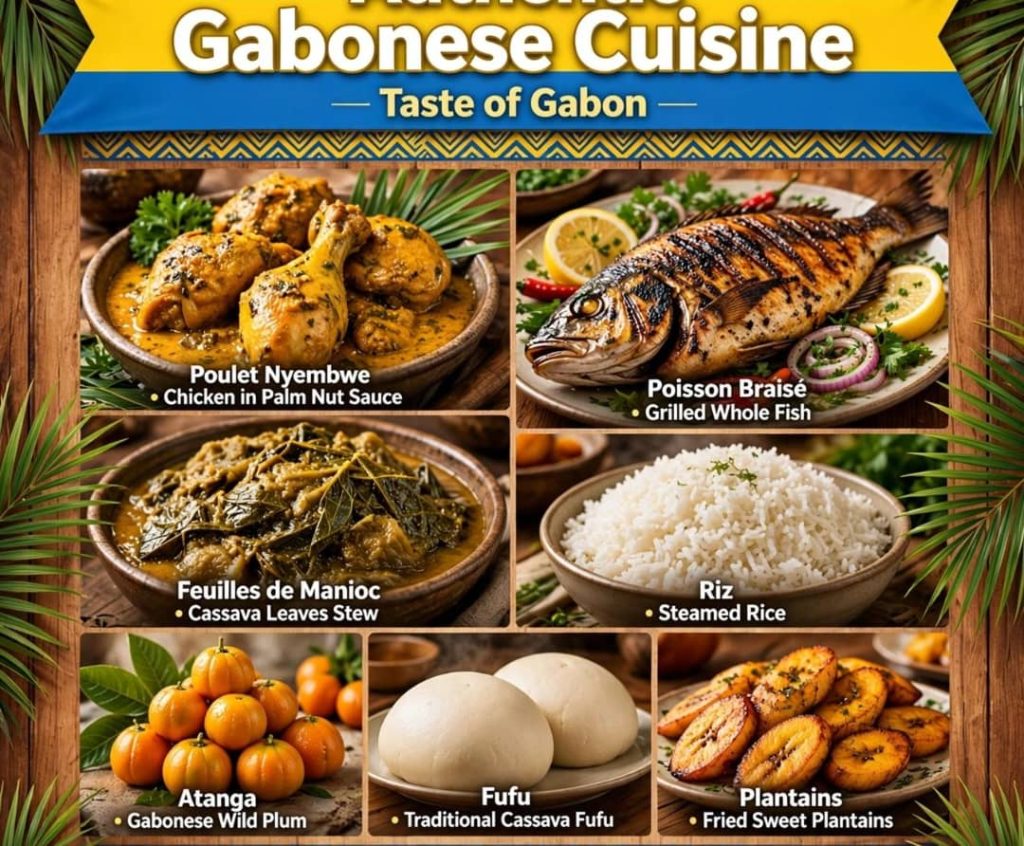
Gabonese Cuisine vs Other Central African Foods: What Makes It Unique?
Discover what makes Gabonese cuisine unique compared with other Central African foods. From palm-nut-rich Poulet Nyembwe and smoked fish to cassava, plantains, forest ingredients, seafood and French culinary influences, Gabonese food reflects the country’s Atlantic coastline, tropical rainforest and diverse cultural heritage. This guide from Mandrill African Safaris explores the similarities and differences between Gabonese, Cameroonian, Congolese and Central African Republic cuisines—and why food is an essential part of experiencing Gabon.
Introduction: A Taste of Gabon
When people think about Gabon, images of tropical rainforests, Atlantic beaches, elephants, gorillas and spectacular national parks often come first. But there is another way to experience the country: through its food.
Gabonese cuisine is a fascinating reflection of the country’s geography and cultural diversity. Located on the Atlantic coast of Central Africa, Gabon combines abundant seafood with ingredients from its tropical forests and agricultural communities. Cassava, plantains, rice, fish, palm nuts, peanuts and leafy vegetables form an important part of the local food culture.

At first glance, Gabonese food may seem similar to the cuisines of neighbouring countries such as Cameroon, the Republic of Congo, the Democratic Republic of Congo and the Central African Republic. Indeed, there are plenty of shared ingredients and cooking traditions. Cassava, plantains, palm oil, fish, peanuts and leafy greens appear across the region.
So, what makes Gabonese cuisine different?
The answer lies in the combination of Atlantic seafood, rainforest ingredients, palm-nut sauces, traditional cooking techniques and cultural influences, including French culinary traditions.
For travellers planning a Gabon safari, discovering the country’s cuisine can be just as memorable as exploring its wildlife.
The Foundation of Gabonese Cuisine
Gabonese food is strongly connected to the country’s natural environment. The Atlantic Ocean provides fish and seafood, while the forests provide wild fruits, edible plants, nuts and other traditional ingredients.
Cassava is one of the most important staples. It may be boiled, fried, fermented, processed into flour or prepared as a dense accompaniment such as bâton de manioc. Plantains, yams and rice also frequently accompany sauces, fish and meat.
This reliance on locally available ingredients gives Gabonese cuisine an earthy, hearty character.
The food is also highly regional. Coastal communities have easy access to fresh and smoked fish, while inland communities traditionally make greater use of forest and agricultural products.
That means there isn’t one single “Gabonese flavour.” Instead, the cuisine is a collection of regional and cultural traditions brought together under one national identity.
Poulet Nyembwe: The Dish That Defines Gabonese Food
One of the best-known examples of Gabonese cuisine is Poulet Nyembwe, chicken cooked in a rich sauce made from palm nuts.
Palm nuts are processed to produce a thick, aromatic sauce that gives the dish its distinctive colour, texture and flavour. It is commonly served with staples such as rice, cassava, plantain or fufu.
What makes Nyembwe particularly interesting is that it connects Gabonese cooking with wider Central African culinary traditions.
Similar palm-based dishes are found in neighbouring countries, particularly in the Congo Basin. However, the Gabonese preparation has its own regional variations and cultural significance.
For anyone asking what to eat in Gabon, Poulet Nyembwe should be near the top of the list.
Gabonese Cuisine vs Cameroonian Cuisine
Cameroon has one of the most diverse food cultures in Central Africa because of its geographic and cultural diversity. Its cuisine includes cassava, yams, rice, maize, potatoes, fish, poultry and numerous vegetables.
One famous Cameroonian dish is Ndolé, a rich preparation based on bitterleaf and ground peanuts, often combined with meat, fish or seafood.
Both Cameroon and Gabon use:
- Cassava
- Plantains
- Palm oil
- Peanuts
- Fish
- Chicken
- Chili peppers
- Leafy vegetables
The difference often comes down to emphasis and regional ingredients.
Gabon’s Atlantic coastline gives seafood a particularly important place in its cuisine. Grilled and smoked fish, spicy fish dishes and seafood preparations are especially relevant in coastal communities.
Gabonese food also has a noticeable French influence, particularly in urban areas, where French-style bread and other European culinary traditions have become part of everyday food culture.
Gabonese Cuisine vs Congolese Food
Gabon and the two Congos share an especially strong culinary connection because they are part of the wider Congo Basin.
Cassava is central to Congolese cuisine, with preparations such as chikwangue and cassava-based pastes forming important staples. Cassava leaves, known as pondu in parts of the Congo, are also widely consumed.
Gabonese cuisine similarly makes extensive use of cassava and cassava leaves.
Palm-based sauces are another major point of connection. Dishes such as moambe in the Congo and Nyembwe in Gabon demonstrate how palm fruit has shaped cooking across the Congo Basin.
However, Gabon’s Atlantic location gives its cuisine a particularly strong seafood identity. The country’s access to ocean fish complements the forest-based ingredients shared with inland Central African neighbours.
In other words, Gabonese cuisine sits at an interesting crossroads between forest food traditions and Atlantic coastal cooking.
Gabonese Cuisine vs Central African Republic Food
The Central African Republic is landlocked, so its food culture naturally differs from Gabon’s coastal cuisine.
Traditional foods in the Central African Republic commonly include cassava, rice, plantains, millet, sorghum, yams, okra and peanuts. Fish from rivers is also important, while chicken and goat are among commonly consumed meats.
There are obvious similarities with Gabon.
Both cuisines rely heavily on starches and sauces, and both make use of cassava, plantains, peanuts, palm oil and fish.
The major difference is geographical influence. Gabon combines rainforest and Atlantic Ocean resources, while the Central African Republic’s food traditions are shaped more strongly by inland agriculture, rivers and savanna-forest environments.
This difference demonstrates an important principle of African cuisine: neighbouring countries can share ingredients while developing completely different food identities.
The Importance of Cassava in Gabonese Food
If there is one ingredient that helps explain Gabonese cuisine, it is cassava.
Cassava is versatile, filling and well adapted to tropical conditions. In Gabon, it can be transformed into several different preparations and served alongside meat, fish and sauces.
One popular preparation is bâton de manioc, a cassava-based food traditionally wrapped and cooked in leaves.
Cassava also appears as a vegetable when the leaves are prepared into sauces.
This dual use of the plant—root and leaves—illustrates the resourcefulness of traditional Central African cooking.
Across the Congo Basin, cassava has similarly become a cornerstone of food security and everyday meals. The World Food Programme describes cassava as a major staple in Congo, with fermented cassava preparations such as chikwangue widely consumed.
Plantains: Sweet, Savoury and Versatile
Plantains are another important feature of traditional Gabonese food.
Depending on their stage of ripeness and method of preparation, plantains can be boiled, fried, mashed or incorporated into stews.
Their versatility makes them a natural partner for rich sauces such as Nyembwe.
Plantains are also common across Central Africa, including the Central African Republic and Congo.
What changes from country to country is the way they are prepared and what they are served with.
This is one reason food travellers should avoid thinking about African cuisines as isolated national categories. Food traditions cross borders, but individual communities give familiar ingredients their own personality.
Seafood Gives Gabon a Coastal Advantage
Perhaps the clearest difference between Gabon and many inland Central African cuisines is the importance of Atlantic seafood.
Gabon has an extensive Atlantic coastline, and fish plays a major role in many coastal meals. Fish can be grilled, smoked, fried or incorporated into sauces and stews.
This creates a distinctive combination:
forest ingredients + palm products + cassava + plantains + Atlantic seafood.
That combination is one of the strongest characteristics of Gabonese cuisine.
For travellers visiting Libreville or coastal destinations such as Loango National Park, sampling fresh fish can become an important part of the travel experience.
Forest Ingredients and Traditional Food Culture
Gabon is covered by extensive tropical rainforest, and its traditional food culture reflects this environment.

Forest products, fruits, nuts, leafy vegetables and other locally sourced ingredients contribute to regional dishes.
Historically, wild game has also formed part of some rural food traditions. However, modern travellers should distinguish between traditional food heritage and responsible wildlife conservation. Mandrill African Safaris encourages responsible tourism and wildlife conservation, particularly when visiting protected areas.
The connection between food and forests is nevertheless important. Gabon’s cuisine demonstrates how people have historically adapted to one of Africa’s richest ecosystems.
French Influence on Gabonese Cuisine
Another feature that distinguishes Gabonese food is the influence of French cuisine.
Gabon was under French colonial rule, and French culinary traditions have influenced urban food culture. Today, visitors can find both traditional African dishes and French-inspired foods, particularly in cities such as Libreville.
This creates a fascinating culinary contrast.
One meal might feature grilled fish, plantains and chili sauce, while another setting may offer bread, pastries or French-style dishes.
Rather than replacing traditional food, these influences have become part of Gabon’s broader urban food landscape.
Why Gabonese Cuisine Is Unique
So, what truly separates Gabonese cuisine from other Central African foods?
1. The Atlantic Ocean
Fresh and smoked seafood are important components of Gabon’s coastal food culture.
2. The Rainforest
Forest products, traditional vegetables, fruits and other local ingredients contribute to the cuisine’s distinctive character.
3. Palm-Nut Cooking
Nyembwe and other palm-based preparations demonstrate the importance of palm products in Gabonese culinary traditions.
4. Cassava and Plantains
These staples provide the foundation for many meals and pair naturally with rich sauces.
5. Cultural Diversity
Gabon is home to numerous cultural communities, each contributing its own food traditions and preparation techniques.
6. French Influence
French culinary traditions have added another layer to Gabon’s already diverse food culture.
Together, these elements create a cuisine that is unmistakably Central African but distinctly Gabonese.
Food and Safari Tourism in Gabon
For travellers, food is more than something to eat between game drives.
It is a gateway into local culture.
A Gabon safari can combine wildlife encounters with opportunities to experience traditional dishes, local markets, coastal communities and everyday life.
Imagine spending the morning exploring rainforest landscapes, watching wildlife in a national park, and later enjoying grilled fish with plantains or a traditional palm-nut sauce.
That combination of wildlife, nature, culture and cuisine is what makes Gabon such an exciting destination for adventurous travellers.
At Mandrill African Safaris, we believe that exploring Africa should involve more than ticking national parks off a list. Understanding local food, traditions and communities adds depth to the journey.
Final Thoughts
Gabonese cuisine shares many ingredients and cooking traditions with other Central African foods, but its identity is shaped by a unique combination of rainforest resources, Atlantic seafood, cassava, plantains, palm nuts and cultural diversity.
From the rich palm-nut sauce of Poulet Nyembwe to smoked fish, cassava dishes and plantain-based meals, Gabon offers travellers a culinary experience that deserves more attention.
Compared with the food of Cameroon, Congo and the Central African Republic, Gabonese cuisine stands out not because it is completely different, but because it brings together coastal and rainforest traditions in a particularly distinctive way.
For anyone planning a trip to Gabon, don’t just explore the forests, beaches and wildlife—taste the country too.
Experience Gabon with Mandrill African Safaris
Ready to discover Gabon’s wildlife, culture and cuisine?
Mandrill African Safaris can help you plan a memorable Gabon adventure featuring destinations such as Libreville, Loango National Park and Lopé National Park, with opportunities to experience the country’s remarkable natural and cultural heritage.
Your Gabon adventure isn’t complete until you’ve tasted Gabon.