Why is Kibale National Park Called the Primate Capital of the World?
Uganda, often referred to as the Pearl of Africa, is home to some of the richest biodiversity on the continent. Among its ten national parks, one destination stands out for primate lovers—Kibale National Park, famously called the Primate Capital of the World. But what gives this forest reserve such a remarkable title? The answer lies in its extraordinary concentration of primate species, unmatched diversity of wildlife, breathtaking landscapes, and unforgettable trekking adventures.
1. Home to the Highest Concentration of Primates in Africa
Kibale National Park is globally renowned because it harbors the largest diversity and density of primates in Africa. Covering about 795 square kilometers of tropical rainforest, woodland, and swamp, the park shelters an astonishing 13 species of primates. This includes the world-famous chimpanzees, as well as rare species like the L’Hoest’s monkey and the Uganda red colobus.
Nowhere else in Africa will you find such a remarkable mix of primates coexisting in a single ecosystem. It is this unique richness that has earned Kibale the proud title of the Primate Capital of the World.
2. The Star Attraction: Chimpanzee Trekking in Kibale
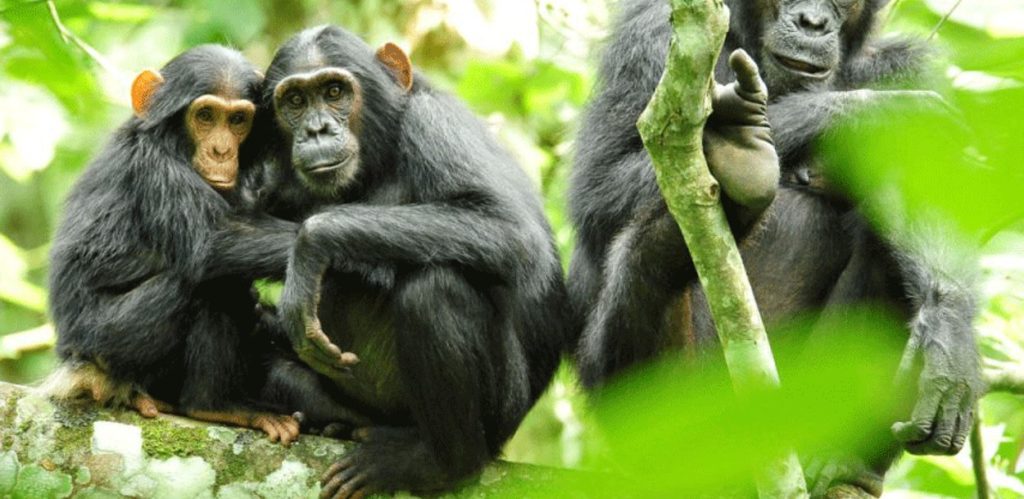
The park’s biggest draw is chimpanzee trekking, an activity that attracts thousands of visitors every year. Kibale is home to about 1,500 chimpanzees, the largest population in Uganda. Trekking allows travelers to spend time with habituated chimpanzee groups, observing their behaviors up close—from grooming rituals to hunting and communication.
Unlike mountain gorilla trekking in Bwindi, chimpanzee trekking in Kibale offers a more energetic, fast-paced experience. Chimps are lively, vocal, and constantly moving, giving trekkers an action-packed encounter. For those who wish to dive deeper, the Chimpanzee Habituation Experience allows visitors to spend an entire day following a troop as they go about their natural activities.
This rare opportunity makes Kibale the best place in Africa to see chimpanzees in the wild.
3. Thirteen Primate Species in One Park
Beyond chimpanzees, Kibale National Park is a living museum of primate diversity. Visitors often encounter several species in a single trek. These include:
-
Uganda red colobus – an endangered species rarely seen outside Uganda.
-
L’Hoest’s monkey – shy and uncommon, often spotted in Kibale’s undergrowth.
-
Black-and-white colobus monkey – easily recognized by its long white tail.
-
Red-tailed monkey – playful and colorful.
-
Olive baboon – social and dominant, often roaming in large groups.
-
Grey-cheeked mangabey – with a distinct mane and loud calls.
-
Blue monkey – known for its vibrant coloring.
In total, Kibale is home to over 13 primate species, more than any other protected area in East Africa. This makes it a true paradise for primate enthusiasts and researchers.
4. Birdlife and Other Wildlife Diversity
While primates take center stage, Kibale is not only about monkeys. The park is also a hotspot for birding, with over 370 bird species recorded. Some of the sought-after birds include the African pitta, green-breasted pitta, and the black-capped apalis. For birdwatchers, Kibale offers a treasure trove of rare and endemic species.
Additionally, the park supports a range of mammals such as forest elephants, bushbucks, giant forest hogs, and leopards—though these are less commonly seen due to the dense vegetation. This blend of wildlife further enhances Kibale’s reputation as a biodiversity jewel in Uganda.
5. Lush Habitats and Breathtaking Landscapes
Kibale National Park is part of a larger conservation corridor that includes Queen Elizabeth National Park and Semuliki National Park, forming one of the richest ecological zones in Africa. The park itself features an enchanting mix of tropical rainforest, savannah grasslands, and swampy valleys, making it a scenic paradise.
The towering trees, lush canopies, and rich vegetation not only shelter wildlife but also provide breathtaking views for eco-tourists and photographers. This pristine habitat ensures that primates and other animals thrive, further cementing Kibale’s global reputation.
6. A Center for Research and Conservation
Kibale is not just a tourism hotspot—it is also a major center for scientific research. Conservationists and primatologists from around the world come here to study chimpanzees and other primates. The Kanyawara and Ngogo chimpanzee communities are particularly well studied, offering valuable insights into primate behavior, social structures, and conservation needs.
By protecting such high biodiversity, Kibale plays a crucial role in global wildlife conservation, ensuring future generations can still experience these wonders.
7. Community Involvement and Sustainable Tourism
One of the reasons Kibale has succeeded in conservation is because of strong community involvement. Local communities benefit from tourism revenue, employment opportunities, and conservation programs. Initiatives like Bigodi Wetland Sanctuary, managed by the community, provide alternative livelihoods while promoting ecotourism.
This harmony between people and nature makes Kibale a model for sustainable tourism in Uganda.
8. Planning Your Visit with Mandrill African Safaris
At Mandrill African Safaris, we specialize in crafting unforgettable journeys to Kibale National Park and beyond. Whether you’re seeking a thrilling chimpanzee trekking adventure, a comprehensive Uganda primate safari, or a multi-destination tour combining Kibale with Bwindi Impenetrable Forest and Queen Elizabeth National Park, we create personalized itineraries tailored to your interests.
Our expert guides ensure you get the most rewarding encounters, while our eco-friendly approach supports conservation and local communities.
Conclusion: Why Kibale Truly Deserves the Title
So, why is Kibale National Park called the Primate Capital of the World? Because nowhere else on Earth will you find such an incredible mix of chimpanzees, colobus monkeys, mangabeys, and baboons all thriving in one protected forest. Combined with its rich birdlife, stunning scenery, and research significance, Kibale stands out as a global treasure for both travelers and scientists.
When you visit Uganda, a journey to Kibale is not just a safari—it’s a chance to walk through one of the world’s most primate-rich habitats, experiencing the raw beauty and intelligence of our closest relatives in the wild.