

Explore the Heart of Rwanda: Kigali City Tour with Mandrill African Safaris
2025-06-26
How to Combine Rwanda and Kenya in One Incredible African Safari
2025-07-01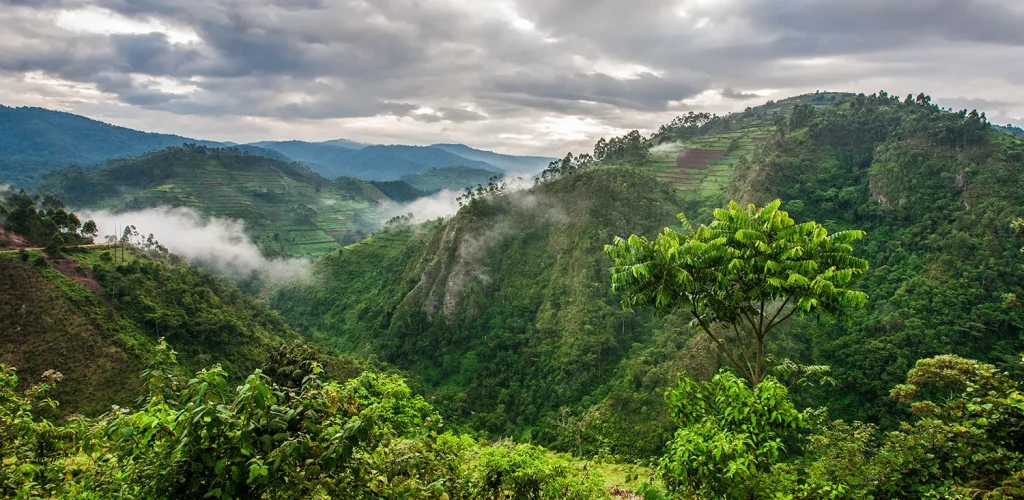
Bwindi Through Time
🌿 From Wilderness to Wonder: The Untold Transformation of Bwindi Impenetrable National Park Over the Years Tucked away in the misty hills of southwestern Uganda lies Bwindi Impenetrable National Park, a sanctuary that time almost forgot. Long before it became a global icon for gorilla trekking, this dense rainforest was an untamed mystery — feared, respected, and largely untouched by civilization. Today, it stands as one of the most celebrated national parks in Africa, famous for its endangered mountain gorillas, rich biodiversity, and cultural heritage.
In this blog, we take a journey through time to uncover the transformation of Bwindi Impenetrable National Park — from its early days as a feared jungle to its current status as a UNESCO World Heritage Site and premier Uganda safari destination.
Bwindi in the Past: A Forest of Legends and Isolation
Long before tourism, long before Uganda’s independence, Bwindi was a dense, mysterious jungle — truly “impenetrable” in every sense. The name itself, “Bwindi”, comes from the local Runyakitara word meaning “darkness”, a fitting title for a place where even daylight struggles to pierce the canopy.
Home of the Batwa: The Original Forest People
For thousands of years, the Batwa pygmies, often called “the keepers of the forest,” lived in harmony with the wild. They hunted small game, gathered medicinal herbs, and worshipped the spirits of the forest. To them, Bwindi was not just a jungle — it was a sacred home, a source of life and spiritual identity.
Before the 20th century, Bwindi was unknown to the outside world. Its rugged terrain, steep hills, and thick undergrowth discouraged any kind of human intrusion. No roads. No trails. Only forest paths created by elephants and gorillas.
The Discovery Era: Scientific Exploration and Colonial Interest
In the 1930s, British colonial scientists began exploring Uganda’s Albertine Rift region. Bwindi caught their attention due to rumors of large apes and mysterious biodiversity. When the first sightings of mountain gorillas were confirmed, researchers and conservationists saw its potential — not just for science, but for the future of wildlife preservation.
In 1942, a portion of the forest was gazetted as Bwindi Impenetrable Forest Reserve to protect its unique flora and fauna. However, human settlement and logging activities in surrounding areas still posed threats.
Bwindi’s Turning Point: The Birth of a National Park
The major transformation happened in 1991, when the Ugandan government officially upgraded the reserve to Bwindi Impenetrable National Park. This move was critical in combating deforestation and illegal poaching. It also coincided with the beginning of gorilla tourism, a groundbreaking initiative that would later become Uganda’s top eco-tourism venture.
This transition, however, wasn’t without conflict. The Batwa people were evicted from the forest to promote conservation — a controversial decision that led to the loss of their traditional lands. Since then, various NGOs and local initiatives have worked to empower and reintegrate Batwa communities into conservation and tourism.
Bwindi Today: A Modern Conservation Success Story
Fast-forward to today, and Bwindi has become a shining example of sustainable tourism and wildlife conservation.
Gorilla Trekking: Uganda’s Top Bucket-List Adventure
Bwindi is one of only two places on Earth where you can trek to see mountain gorillas in the wild. With over half of the world’s remaining population of these majestic apes, the park attracts thousands of visitors each year. Gorilla permits fund conservation efforts and support local communities, making tourism a tool for positive change.
Each trek is a life-changing journey. The moment you lock eyes with a silverback gorilla just meters away in the forest’s misty embrace is one few ever forget. The park offers four gorilla trekking sectors — Buhoma, Ruhija, Rushaga, and Nkuringo — each with its own habituated gorilla families and unique terrain.
Rich Biodiversity Beyond Gorillas
Bwindi isn’t just about gorillas. It’s a UNESCO World Heritage Site for a reason. The park hosts over 120 species of mammals, 350+ bird species, and 200 types of butterflies. Rare and endemic species like the African green broadbill, L’Hoest’s monkey, and the giant forest hog thrive here.
It’s also one of the few forests in Africa that survived the last Ice Age — a living relic of ancient ecosystems, making it a treasure trove for scientists and nature lovers.
Technology and Conservation: A New Era
Modern conservation techniques have further revolutionized Bwindi. The Uganda Wildlife Authority (UWA) now uses GPS tracking, drones, and community rangers to monitor wildlife and prevent poaching. Ranger patrols are well-trained, and eco-lodges work in harmony with conservation goals.
The introduction of gorilla habituation experiences, allowing longer encounters with gorillas, has added another layer of adventure and research potential. Meanwhile, eco-friendly tourism models are minimizing environmental footprints while maximizing community benefit.
Local Communities: Partners in Preservation
Today, communities around Bwindi — once at odds with the park’s regulations — are now among its strongest allies. Through partnerships and profit-sharing schemes, villagers benefit from tourism via:
Employment in lodges and as guides
Cultural performances and handicraft sales
Revenue-sharing from gorilla permits
This community-inclusive approach has not only reduced human-wildlife conflict but also fostered a deep sense of pride and ownership among locals.
The Future of Bwindi: Challenges and Hope
Despite its success, Bwindi faces ongoing challenges such as climate change, population pressure, and potential disease transmission from humans to gorillas. But with responsible tourism, research-backed conservation, and global support, the future looks hopeful.
New initiatives aim to introduce electric safari vehicles, plastic-free zones, and climate-adaptive reforestation programs — all while preserving the park’s rich cultural and natural heritage.
Conclusion: A Legacy of Transformation
From an untouched forest cloaked in mystery to a world-renowned conservation and tourism hotspot, Bwindi Impenetrable National Park is more than just a travel destination — it is a symbol of how nature and humanity can coexist. Every visitor who sets foot in Bwindi contributes to a larger story of hope, survival, and transformation.
Whether you’re seeking a face-to-face gorilla encounter or a deep connection with ancient African wilderness, Bwindi welcomes you — not just to explore, but to be part of its living history.


