

Gabon Safari Cost: What to Expect When Planning Your Trip
2025-12-16
Why Visit Gabon? Discover Africa’s Last Eden
2025-12-16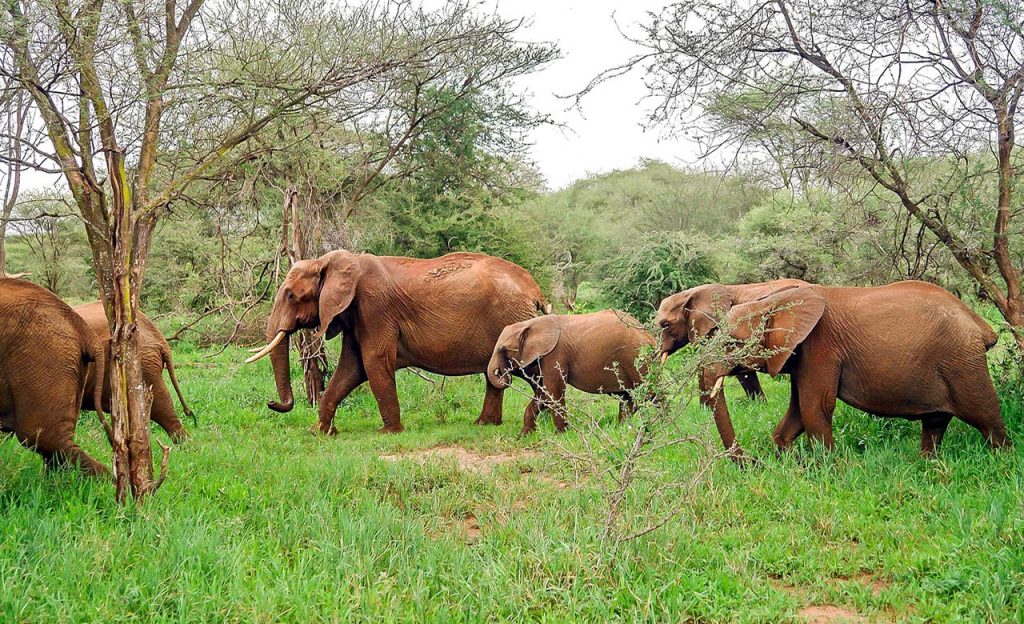
Gabon’s National Parks Network: A Model for Conservation Tourism
Gabon sits on the equator but its conservation vision reaches far beyond latitude lines. In 2002 the Gabonese government created a network of national parks that transformed the country’s approach to biodiversity, local livelihoods and low-impact tourism. Today that network — a mosaic of coastal havens, intact rainforests, river gorges and remote savannas — is widely regarded as a model for how a country can link conservation leadership with high-value, sustainable tourism. In this post we’ll explore why Gabon’s national parks work, highlight iconic parks and experiences, and show how Mandrill African Safaris partners with local conservation efforts to craft unforgettable, responsible journeys.
Why Gabon’s national parks matter
In a single bold decision in 2002 Gabon designated 13 national parks covering roughly three million hectares — about 10–11% of the country’s land area — to protect intact forest and coastal ecosystems. That move established a national framework for safeguarding habitat at continental scale and signaled a government commitment to conservation-led development.
That protected footprint matters because Gabon sits within the Congo Basin — one of the world’s most important carbon sinks and centers of biodiversity. Protecting large, connected areas reduces poaching and habitat fragmentation, preserves migration routes for elephants and forest buffalo, and maintains marine nesting sites for leatherback turtles. These intact ecosystems also enable a tourism model that emphasizes low-volume, high-quality experiences rather than mass-market trophy hunting or extractive industrial tourism.
What makes the network a model for conservation tourism?
1. Scale + political will. The parks’ scale gives management agencies room to conserve wide-ranging species and maintain ecosystem processes. Creating a national parks network required political leadership — a nontrivial prerequisite that many conservation projects lack.
2. Partnerships with science and NGOs. Gabon’s parks have benefited from early and sustained partnerships with scientific NGOs and conservation organizations that helped design, monitor and manage protected areas and community programs. Those partnerships brought technical capacity (ecological surveys, anti-poaching strategies, park zoning) and international funding for long-term programs.
3. Diverse tourism products built on ecology. Rather than a single “safari” product, Gabon offers a range of experiences that match ecosystems to visitor interests: surfacing hippos and surf beaches in Loango; waterfalls and rainforest river expeditions in Ivindo; remote rainforest and elephant tracking in Minkébé; and marine turtle nesting beaches in Mayumba. This diversity allows operators to attract wildlife photographers, birders, adventure kayakers and marine conservationists without overloading any one site.
4. Emphasis on low-impact luxury and community benefit. The best operators and lodges in Gabon focus on small-group departures, locally sourced staff and community linkages that create incentives for conservation. This creates a virtuous cycle: pristine parks attract premium travelers, whose fees help support park rangers and local economies.
Park spotlights — why they’re special (and what you can see)
Loango National Park — “the place where land, sea and savanna meet”
Loango is the park that made Gabon a household name among wildlife-photography enthusiasts. Here the Atlantic surf meets forested coastline, and tidal lagoons attract buffalo, hippos, elephants and—famously—hippos that appear to “surf” the beach at low tide in National Geographic spreads. Loango’s landscapes change dramatically over short distances, enabling diverse wildlife viewing within a compact area. For travelers who love dramatic coastal wildlife photography, Loango is a must.
Ivindo National Park — river gorges and waterfall spectacles
Ivindo’s river systems carve some of Central Africa’s most dramatic waterfalls and rapids — including the famed Kongou Falls — surrounded by pristine lowland rainforest. The park is a hotspot for riverine biodiversity and an excellent place for guided river expeditions, birdwatching and remote wilderness exploration. Recent expeditions and documentaries have highlighted Ivindo’s whitewater sections and the conservation stories that flow from protecting such intact river landscapes.
Mayumba & Pongara — marine life and leatherback turtle nesting
Gabon’s Atlantic coastline is globally important for marine turtles. Parks such as Mayumba and Pongara host some of the world’s largest leatherback turtle nesting aggregations. Night beach patrols, guided nesting-viewing (with strict controls) and marine-focused research give visitors a rare chance to witness and support turtle conservation during nesting season.
Minkébé and Minkébé-region parks — remote rainforest giants
In the northeast, Minkébé protects vast tracts of lowland rainforest and is critical for forest elephant populations and other large mammals. Its remoteness makes it harder to visit, but that same remoteness is essential for species that require large ranges. Conservation here is focused on anti-poaching, scientific monitoring and sustainable community engagement.
How tourism supports on-the-ground conservation
Gabon’s parks show how tourism can be integrated into a broader conservation strategy rather than acting as a standalone industry. Practical mechanisms include:
-
Park fees and concession revenues that help fund rangers, surveillance equipment and ecological monitoring.
-
Community employment in lodges, guiding and park services, which creates alternative livelihoods to poaching or illegal logging.
-
Research and citizen science through operator-supported projects that improve species data and guide management priorities.
-
Responsible visitor behavior enforced by small-group limits, strict viewing rules, and “leave no trace” protocols that minimize wildlife disturbance.
When operators and local authorities coordinate — sharing data, harmonizing patrol priorities, and investing in training — tourism becomes an engine for resilience rather than degradation.
Challenges and how Gabon is addressing them
No system is perfect. Gabon faces pressures from logging, bushmeat hunting and infrastructure development. But the national parks framework creates legal and administrative tools to address those pressures, and strong NGO-government partnerships provide technical capacity for enforcement and community programs. Continued investment, patrol capacity, and benefit-sharing with communities are essential to keep the model working as tourism grows.
Responsible travel tips for visiting Gabon’s parks
-
Go with an experienced operator. Choose operators who pay park fees, hire local guides, and demonstrate proven conservation partnerships.
-
Travel during the right season. Coastal turtle nesting, forest river conditions and wildlife visibility vary seasonally—ask your operator for the best windows.
-
Pack lightly and ethically. Bring reusable gear, respect camera distance rules, and avoid single-use plastics.
-
Support community economy. Buy local crafts, tip guides, and respect local customs and livelihoods.
-
Leave no trace. Follow ranger instructions and never approach or feed wildlife.
Why Mandrill African Safaris recommends Gabon
At Mandrill African Safaris we curate journeys that respect ecosystems and create mutual benefit. Gabon’s parks are a natural fit for our philosophy: premium, low-impact itineraries that center conservation, scientific insight and authentic cultural interaction. Whether you want to photograph the Loango coastline, paddle the Ivindo’s wild river gorges, or witness leatherback turtles on a moonlit beach, we design trips that are immersive, ethical and supportive of local conservation partners.
Bookings, logistics and next steps
Gabon requires careful logistical planning — internal flights, permits, and sometimes sea transfers. Mandrill African Safaris handles permitting, park payments and the on-the-ground details so travelers can focus on the experience. If you’d like a custom itinerary that highlights Gabon’s national parks, sends benefits to local communities and supports conservation, we’ll craft a tailored proposal that matches your travel style and dates.
Conclusion
Gabon’s national parks network is more than a collection of beautiful places: it’s an ambitious, country-scale experiment in conservation-led development. By protecting large, connected habitats and building tourism around ecological diversity and community benefits, Gabon offers a replicable model for countries balancing conservation and economic needs. For travelers who value meaningful wildlife encounters, scientific context and ethical tourism, Gabon delivers experiences that are as rare as they are transformative.
Ready to explore Gabon responsibly? Contact Mandrill African Safaris to plan a conservation-centered journey into the heart of Central Africa.


